Fan types explained
Different fan types solve different problems.
"Cooling fan" sounds simple until you compare the actual options. A tower fan is not trying to do the same job as a desk fan. A ceiling fan changes how a whole room feels. A neck fan is built for movement, not room airflow. This page is here to make those differences easier to understand.
The best fan type usually comes down to room size, where the fan can go, how direct or broad you want the airflow to feel, and how much noise you can tolerate. Once those are clear, the sensible choices narrow down quickly.
Overview
The main fan categories and where they usually fit best
Tower fans are often chosen for bedrooms and living spaces because they save floor space and fit easily into tighter layouts. Pedestal fans are one of the most practical options when stronger airflow and height adjustment matter. Desk fans are more personal and close-range. Bladeless fans are usually considered for cleaner-looking interiors and compact everyday use. Ceiling fans are about room circulation rather than one directed breeze. Wall mounted fans work when floor space is limited. Portable hand fans and neck fans solve a different problem again: staying more comfortable while moving around, commuting, traveling, or spending time outdoors.
The easiest way to think about fan types is this: some are made to move air across more of a room, some are made to cool one person directly, and some are mainly about portability. Once you know which of those jobs matters most, the categories stop feeling confusing.
Pedestal fans
Pedestal fans
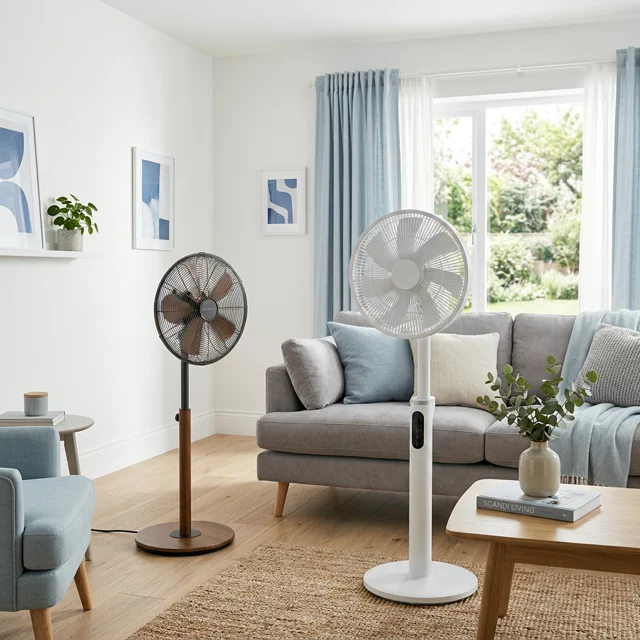
Pedestal fans are still one of the most useful all-round choices for home cooling. They usually offer adjustable height, a larger fan head, and oscillation that can push air across more of the room than a small personal fan.
They make sense when you want stronger airflow and the freedom to point it where it is needed. Bedrooms, living rooms, shared spaces, and larger rooms often suit them well. The trade-off is that they take up more visible floor space than tower fans and can look more practical than decorative.
If you want flexibility, broad airflow, and easy repositioning, pedestal fans are often one of the safest places to start.
Tower fans
Tower fans
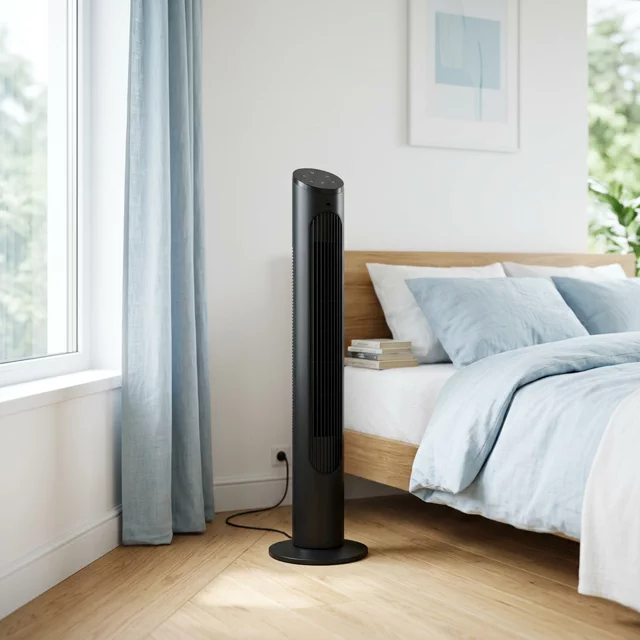
Tower fans are popular because they have a smaller footprint and are easy to fit into bedrooms, corners, and tighter living spaces. They often appeal to people who want a cleaner, slimmer look than a traditional pedestal fan.
In normal home use, tower fans tend to suit small to medium rooms especially well. They are often chosen for bedrooms because they can deliver steady airflow without taking over the room visually. Some people also prefer them for night use when a less bulky fan feels easier to live with.
They are a strong choice when space matters, but if maximum airflow is the main goal, a pedestal fan may still feel more powerful.
Desk fans
Desk fans
Desk fans are for direct, personal airflow. They are not trying to cool a whole room. They are there to make one working position, one bedside table, or one small area more comfortable.
That makes them useful for offices, study setups, home desks, and spots where a larger fan would be awkward or unnecessary. They are usually easy to move, simple to aim, and well suited to people who want airflow close to the body instead of across the whole room.
If you mostly care about comfort at one seat or workstation, a desk fan is often the right category to think about first.

Bladeless fans
Bladeless fans
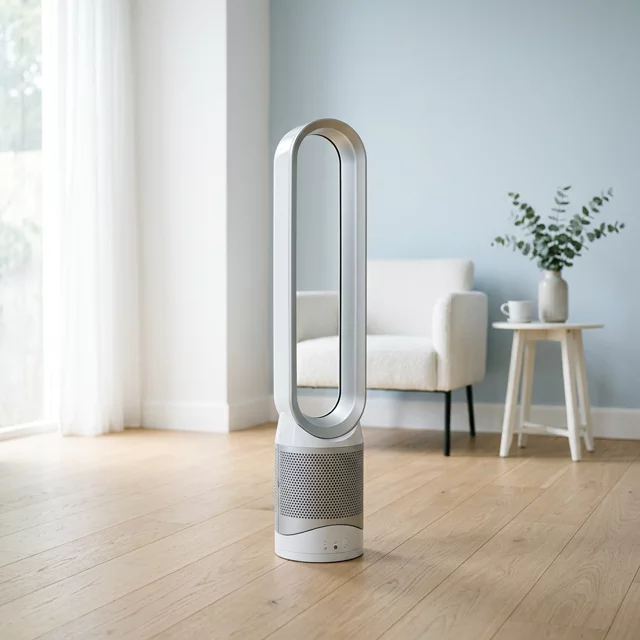
Bladeless fans have become popular mainly because of how they look and how easily they fit into modern rooms. They often appeal to people who want something that feels cleaner, less bulky, and a bit more design-led than a conventional fan.
In practice, they are usually chosen for bedrooms, desks, and living spaces where appearance matters as much as airflow. They are also commonly considered by people who prefer a fan surface that is easier to wipe down than a traditional grille and blade setup.
The important thing to compare is how the fan actually behaves in a room: airflow, noise at different speeds, size, and whether the design is worth the trade-off. They can look great, but they still need to do the basic job well.
Ceiling fans
Ceiling fans
Ceiling fans belong in their own category because they are part of the room, not just an appliance you set down somewhere. They are built for room-wide air movement and steady circulation rather than one focused stream of air.
They can work very well, but the room has to support them properly. Placement, blade clearance, and ceiling height matter much more here than with floor or portable fans. They also feel different in use because they shape the room as a whole rather than creating one direct breeze from a single point.
If you want something permanent that helps the whole room feel better over long periods, ceiling fans are often worth considering early.

Wall mounted fans
Wall mounted fans
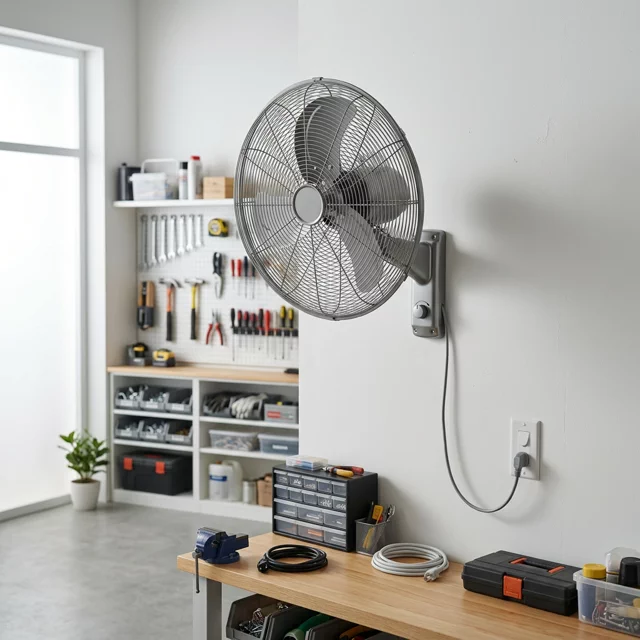
Wall mounted fans are useful when floor space is limited or when you want airflow kept up and out of the way. They often make sense in garages, workshops, home gyms, utility spaces, and some practical indoor areas where a standing fan would just get in the way.
They are helpful because they free up the floor and can direct airflow across a room from a fixed point. That makes them attractive in spaces where people move around a lot or where equipment and storage already use up the available space.
In normal home rooms they are more niche, but in the right setting they can be a very sensible option.
Fans with ice box cooling
Fans with ice box cooling
Fans with ice box cooling sit somewhere between a normal fan and something that feels more assisted. People usually look at them when ordinary airflow does not sound like enough, but full air conditioning is not what they want either.
This category needs clear expectations. It is still not the same thing as AC. The main appeal is that chilled water or ice can make the outgoing air feel more refreshing than a standard room fan, especially at close range.
They can be interesting for personal comfort and smaller indoor spaces, but they should be judged as a comfort aid rather than as a full replacement for air conditioning.


Hand fans
Hand fans
Hand fans are about portability first. They are built for commutes, queues, travel, events, outdoor use, and those moments when you want a quick direct breeze without carrying anything bulky.
They are not a room solution, and that is exactly the point. A good hand fan gives immediate personal airflow in places where a desk fan, tower fan, or pedestal fan is not even part of the conversation.
They are most useful when being light, rechargeable, and easy to grab matters more than broad airflow.
Neck fans
Neck fans
Neck fans are wearable personal fans designed for hands-free cooling. They make the most sense when you are walking, commuting, working outside, traveling, or doing anything where holding a fan would be awkward.
The appeal is convenience. You can keep moving while still getting airflow around the face and neck area. That makes them different from ordinary portable fans, even though they are serving the same basic purpose of improving comfort in the heat.
They are not a replacement for a room fan, but for mobility they solve a real problem well enough that they now stand as their own category.

Quick takeaway
The easiest way to narrow fan types down
If you want broad adjustable airflow in a room, start with pedestal fans. If space is tighter and you want something slimmer, look at tower fans. If the airflow only needs to reach one person, desk fans are often enough. If you want something more design-led, compare bladeless fans carefully on real performance rather than just appearance. If you want room circulation from above, think ceiling fans. If the fan must stay out of the way, wall mounted models become more relevant. If you need cooling while moving around, hand fans and neck fans make more sense than room fans.
That leaves the more niche category of fans with ice box cooling, which are mainly for people who want something a bit more refreshing than ordinary airflow but are not looking for full AC.
Best for rooms
Pedestal fans, tower fans, ceiling fans, and some wall mounted fans.
Best for personal cooling
Desk fans, bladeless fans in smaller spaces, hand fans, neck fans, and smaller cooling units with ice or water assistance.
FAQ