Cooling fan guides for real use

Choose the right cooling fan for your room, noise level, and daily use.

A good fan can make a bedroom easier to sleep in, keep a desk or office more comfortable, or move air through a larger room without the cost and setup of air conditioning. The tricky part is that "fan" covers a lot of very different products.

Tower fans, pedestal fans, desk fans, ceiling fans, wall mounted fans, and portable models all solve heat in different ways. This site is here to make those differences clear, so it is easier to work out what actually fits your space.

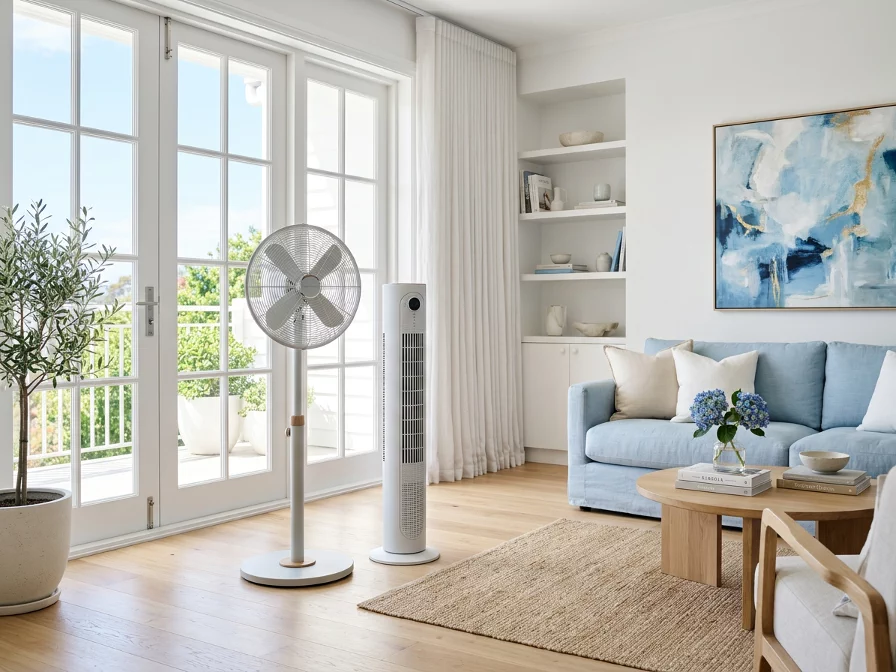
Bright modern living room with a stylish cooling fan in a white and light blue interior
Start with the room Room size, fan position, and the kind of airflow you want matter more than marketing labels.
Then narrow it down Noise, portability, height, oscillation, controls, and energy use usually decide which fan type makes the most sense.

What matters most

The main things people should know before buying a fan

The first question is not "Which model is best?" It is "What kind of fan fits this room and this use?" A bedroom often needs quieter airflow and a smaller footprint. A larger living room may need wider oscillation or stronger air movement. A desk setup usually calls for something compact and direct. If the fan needs to move around often, portability becomes part of the decision too.

Noise matters more than people expect. A fan that feels fine during the day can be annoying at night, especially in a bedroom. Placement matters too. Some fans are best for targeted airflow, while others are better at moving air across a wider area. The front page should cover these basics because they shape almost every later choice.

Room size and airflow

Small personal fans and desk fans are built for direct airflow close to where you sit. Tower fans and pedestal fans usually make more sense when one fan needs to cover more of the room. Ceiling fans are different again because they support broader whole-room circulation from above.

Noise and sleeping comfort

If the fan will run overnight, sound level becomes a real buying factor, not a small extra. Bedroom shoppers usually care about a quieter motor, smoother airflow, useful speed steps, and whether the fan can stay comfortable on lower settings for hours.

Placement and flexibility

Some homes have space for a floor fan and some do not. That is where tower fans, wall mounted fans, ceiling fans, and portable battery models start to separate. The best choice often comes down to where the fan can realistically go and how often it needs to move.

Fan types

The main fan categories and what they are generally good at

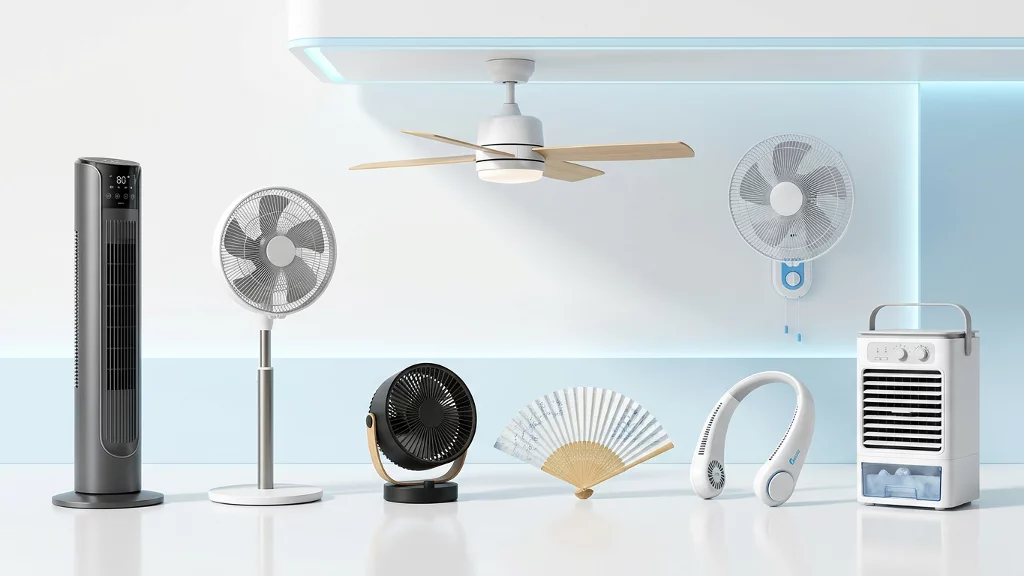
Tower fans are popular because they are slim, easy to place, and often work well in bedrooms and living spaces where a bulkier fan would feel out of place. Pedestal fans stay relevant for a reason: they are practical, adjustable, and can push air across a larger area. Desk fans are more focused and personal. Ceiling fans are better suited to steady room-wide circulation when the room can support installation.

Wall mounted fans are useful where floor space is limited. Fans with ice box cooling attract people who want more than ordinary air movement, though that category needs clear explanation because it is not the same thing as true air conditioning. Hand fans and neck fans belong in the picture too because portable cooling has its own use cases, especially for travel, commuting, outdoor events, and hot days away from home.

Comparison view showing multiple cooling fan types on a clean bright background

Useful buying factors

What people often compare after choosing the basic fan type

Once the category is roughly right, people usually start comparing how the fan behaves day to day. Does it oscillate widely enough? Is the height adjustable? Does it tilt? Is it easy to move? Does it have a timer, remote, or sleep mode? Those details matter because two fans in the same broad category can still feel very different in real use.

Energy use matters as well, especially for fans that may run for long periods in warm weather. Fans are usually chosen because they are simpler and cheaper to run than AC, but not every fan is equally efficient and not every room needs the same kind of airflow. That is one reason selection should start with the room and the use, not just the product name.

Good questions to answer before buying

Is this for a bedroom, desk, living room, or larger open space?

Do you need quiet overnight use or stronger daytime airflow?

Does the fan need to stay in one spot or move around often?

Do you need a fixed installation or a simple plug-in option?

Would broad circulation help more than direct airflow?
Fans vs. AC

A fan helps with comfort, but it is not the same thing as air conditioning

This is one of the most useful things to make clear on the front page. A fan improves comfort by moving air. Air conditioning lowers the temperature of the air itself. That difference affects expectations, running cost, and what kind of product someone should even be comparing in the first place.

In many rooms, a fan is exactly the right answer. In others, especially in stronger heat or when true cooling is the goal, it may not be enough on its own. That is why a proper fan site should explain where fans are excellent, where they are limited, and where the choice becomes more about cooling strategy than fan type.

What fans do well

Move air, improve comfort quickly, cost less to run, and work in many rooms without complicated setup.

What fans do not do

They do not cool the air the way AC does, so expectations need to match the room, the heat, and the job you want the fan to do.

Ceiling fans

Ceiling fans need a slightly different kind of thinking

Ceiling fans are less about moving a product from room to room and more about how the room itself works. Size matters, ceiling height matters, and installation height matters. That is why ceiling fans deserve their own guide instead of being treated like just another item in a list of portable room fans.

On the homepage, it is enough to make clear that ceiling fans are best thought of as part of room circulation and layout. They can be excellent, but they are not the same buying decision as picking up a desk fan, a tower fan, or a portable battery fan.

FAQ

Common questions before choosing a cooling fan

What type of fan is best for a bedroom?
In many bedrooms, tower fans and quieter pedestal fans are the most common starting points because they can give useful airflow without taking over the room. The better choice depends on floor space, noise tolerance, and how broad you want the airflow to feel.
Are fans cheaper to run than AC?
Usually yes. Fans tend to use much less electricity than air conditioning, which is one reason they are such a common first step for summer comfort. They improve comfort through airflow, though, not by cooling the air itself.
How do I choose the right fan for my room?
Start with the room, not the model. Think about room size, where the fan can go, how quiet it needs to be, whether it has to move around, and whether you want direct airflow or broader circulation.